Color Vision Deficiency

Understanding Red-Green Color Vision Deficiency

Explore how people with red-green color blindness perceive the world differently

About Color Blindness

Red-green color blindness is the most common form of color vision deficiency, affecting approximately 8% of men and 0.5% of women worldwide. It's primarily genetic and results from abnormalities in the red or green cone cells in the retina.

People with red-green color blindness often have difficulty distinguishing between reds, greens, browns, and oranges. They may also struggle with telling the difference between blue and purple.
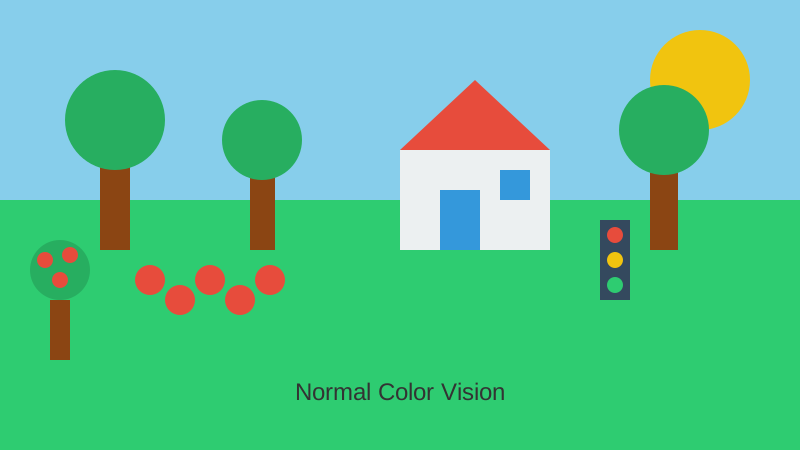
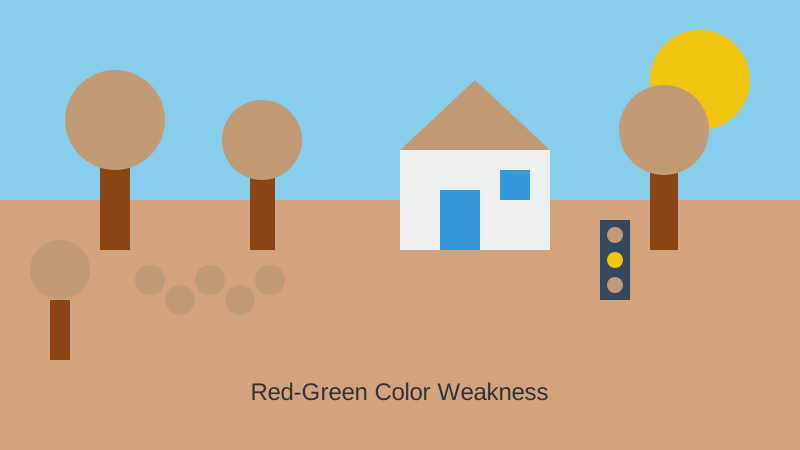
Visual Comparison

Drag the slider to compare normal vision with red-green color blind vision

100%
Normal vision Color blind vision
Normal Vision Color Blind Vision

Upload Your Image

See how your image would appear to someone with red-green color blindness

100%

Drag & drop your image here or click to browse

Colorblindness Test

Take this Ishihara test to check if you might have color vision deficiency

Note: This test is for informational purposes only and should not replace professional medical advice

Frequently Asked Questions

Funny and practical questions about living with color blindness

Practical Questions

What's the easiest way to tell if a traffic light is green without waiting for cars to move?

A smart driving workaround! Modern traffic lights follow a consistent pattern: green is always at the bottom, yellow in the middle, and red at the top. Focus on position rather than color. Many traffic lights now also have different shapes or brightness levels for each color. Some colorblind drivers use the car's reflection on wet roads or buildings to judge brightness changes. In some countries, traffic lights include symbols or have horizontal arrangements, so know your local system. When in doubt, wait for the car next to you to move!

How do I pick ripe tomatoes without asking someone every time?

A grocery store hack many seek! Since the red-green color difference can be challenging, focus on non-color cues: Feel for firmness with a slight give (not too soft or hard), smell for that sweet tomato aroma near the stem, and look for a slight shine on the skin. Avoid tomatoes with wrinkles, cracks, or bruises. Roma tomatoes should feel heavy for their size when ripe. When in doubt, vine-ripened tomatoes are usually a safer bet as they're picked closer to peak ripeness.

Are there apps that can just tell me what color something is?

A tech solution for daily life! Yes, there are several excellent apps designed specifically for this purpose. Popular options include: ColorBlind Pal, Color Blind Aid, Chromatic Vision Simulator, and Color Detector. These apps use your smartphone's camera to identify colors in real-time and announce them to you. Some even simulate how different types of colorblindness affect vision. Many apps are free or have free versions with basic functionality. Just point your camera at any object, and the app will tell you exactly what color you're looking at!

How do I match my socks without looking like a clown?

A practical fashion fix! Try these strategies: Buy multiple pairs of the same sock style to eliminate matching altogether. Use sock organizers or clip pairs together after washing. Label socks with small tags or marks only you can see. Stick to neutral colors like black, white, and gray which are easier to distinguish. Some people organize socks by texture or pattern rather than color. When all else fails, embrace the mismatched sock trend – it's actually fashionable now! Or simply ask a family member for a quick sock check before heading out.

Funny Questions

Do I look like a Christmas tree to everyone else too, or is it just me?

A hilarious take on mismatched holiday outfits! For people with red-green color blindness, the classic Christmas colors can blend together, making festive clothing choices challenging. What looks like a tasteful holiday sweater to you might actually be a vibrant mix of clashing colors! Pro tip: Ask a trusted friend for outfit feedback or use color-matching apps before heading to holiday parties.

Is my steak actually cooked, or am I just eating raw meat like a savage?

Kitchen confusion at its funniest! The subtle color changes between rare, medium, and well-done meat can be nearly impossible to detect for people with color vision deficiency. Many colorblind chefs rely on meat thermometers instead of visual cues. For steaks, 125°F (52°C) is rare, 135°F (57°C) is medium-rare, 145°F (63°C) is medium, 155°F (68°C) is medium-well, and 165°F (74°C) is well-done. No more savage dining required!

Did I just cheer for the wrong team because their jerseys look the same?

A sports fan's comical mix-up! Red vs. green team colors are a nightmare for people with deuteranopia or protanopia. Some colorblind sports enthusiasts memorize team positions on the field rather than relying on jersey colors. Others follow the crowd's reaction or watch with friends who can clarify which team is which. Some sports broadcasts now offer colorblind-friendly viewing options. Next time, maybe just cheer for both teams and claim you're just being sportsmanlike!